
Roy Atwell: The Comedian Whose Mixed-Up Words Made Disney History
The Life and Legacy of Roy Atwell: From Broadway Comedy to the Iconic Voice of Doc in Disney’s Snow White

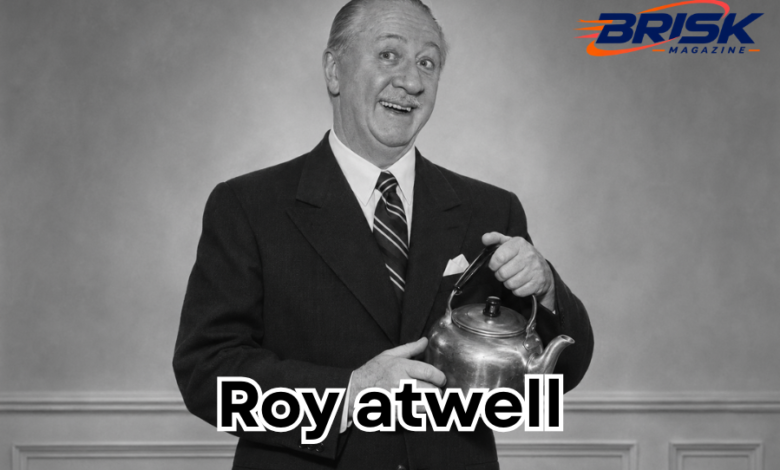
Long before animation made his voice famous, Roy Atwell had turned tangled sentences into an art form. Words emerged in unexpected combinations, and confusion became the punchline.
That talent eventually made him the voice of Doc in Walt Disney’s Snow White and the Seven Dwarfs (1937). Yet the part that preserves his name for modern audiences was only one chapter in a much longer career encompassing Broadway, silent and sound films, radio, and songwriting.
Quick Bio
| Detail | Information |
|---|---|
| Full Name | John Leroy Atwell |
| Professional Name | Roy Atwell |
| Date of Birth | May 2, 1878 |
| Place of Birth | Syracuse, New York, USA |
| Date of Death | February 6, 1962 |
| Age at Death | 83 years |
| Nationality | American |
| Profession | Actor, Comedian, Voice Actor, Lyricist |
| Famous For | Voice of Doc in Snow White and the Seven Dwarfs (1937) |
| Known For | Stammering, wordplay and verbal comedy |
| Notable Films | Souls for Sale, Varsity Show, The Fleet’s In |
| Career | Broadway, Film, Radio and Voice Acting |
Who Was Roy Atwell?
Born John Leroy Atwell on May 2, 1878, in Syracuse, New York, Atwell became an American performer known for comic verbal mishaps. He died in New York City on February 6, 1962, aged 83. His life stretched across an extraordinary transformation in entertainment, from the dominance of live theatre to the arrival of sound cinema and animated features.
Atwell developed a recognisable style in which apparent hesitation, misplaced syllables and scrambled expressions could turn ordinary exchanges into comedy. It worked in theatres and later translated naturally to microphones and film soundtracks.
Early Life and the Road to Theatre
Biographical records identify Syracuse as Atwell’s birthplace and the Sargent School of Acting as part of his training. His stage experience demanded timing, projection and sensitivity to audience response.
A historical profile also reports that he served in the New York National Guard in 1898. More revealing for his public career, however, is the documented fact that his Broadway appearances began early in the twentieth century. By 1901, he was appearing in New York stage productions, decades before his best-known screen role.
The Stage Mistake That Became a Comic Identity
A frequently repeated story about Atwell describes an early dramatic performance in which he accidentally jumbled a line about birds in springtime. Instead of ruining the scene, the verbal mix-up reportedly delighted the audience. According to the anecdote, the reaction encouraged him to repeat the effect and pursue comedy.
The episode is part of his theatrical legend rather than a fully documented account of one identifiable performance. Still, it captures the principle behind the act he became known for: a speaker who seems certain of his meaning, even as his vocabulary takes an unexpected detour.
Building a Career on Broadway
Atwell’s stage résumé was extensive. The Internet Broadway Database records appearances in Moonshine (1905), Marrying Mary (1906), The Mimic World (1908) and Mlle. Mischief (1908). He was also featured in The Firefly, which ran from December 1912 to March 1913, playing Jenkins.
Subsequent productions show how consistently he worked. He appeared in Alone at Last (1915), Oh, My Dear! (1918), Apple Blossoms (1919) and Helen of Troy, New York (1923). His credits continued through How’s Your Health? (1929), Strike Me Pink (1933) and On to Fortune (1935).
Roy Atwell’s Movie Career Before and After Disney
Atwell’s film work began well before Snow White. The American Film Institute catalogues roles in several 1922 productions, including Red Hot Romance, South of Suva, The Heart Specialist and Don’t Get Personal. In the 1923 Hollywood satire Souls for Sale, he played Arthur Tirrey.
The transition from silent cinema to sound was especially significant for an actor whose distinctive skill involved speech. By the late 1930s, his film credits included The Harvester (1936), Varsity Show (1937) and Behind the Mike (1937). In Varsity Show, he played Professor Washburn.
His appearances continued after Disney’s breakthrough: The Fleet’s In (1942), People Are Funny (1946), Abie’s Irish Rose (1946) and Where There’s Life (1947) are among his documented credits. These were not all starring vehicles, but together they demonstrate his continuing place in the entertainment industry.
How Roy Atwell Became the Voice of Doc
Snow White and the Seven Dwarfs premiered on December 21, 1937, and marked a turning point for American feature animation. Disney needed its dwarfs to be individually memorable, with personalities audiences could grasp through dialogue, songs, movement and expression.
Doc, the bespectacled and unofficial leader of the group, often tries to sound decisive while confusing his own words. That combination of authority and verbal disorder was an ideal fit for Atwell’s established comic style. His vocal performance gave the character an endearing tension between wanting to lead and struggling to communicate smoothly.
The Library of Congress identifies Atwell as Doc’s original voice actor. His performance was uncredited in the film’s original on-screen titles, as were those of the other voice performers. Nevertheless, it became his most enduring screen association.
Why Doc’s Voice Worked
Doc’s comedy depends on more than a series of stammers. He is a character who wants to organise his companions and protect Snow White, yet repeatedly trips over his own instructions. Atwell makes those interruptions expressive rather than random.
His vocal rhythm helps audiences understand the personality beneath the mistakes: earnest, occasionally flustered and fundamentally well-meaning. The result complements the animators’ design and acting choices, making Doc recognisable even when he is not at the centre of a scene.
Importantly, Atwell did not supply the voices of all seven dwarfs. The film used a wider ensemble, including Pinto Colvig as Grumpy and Sleepy, and Otis Harlan as Happy. Atwell’s contribution was specific to Doc, and its distinctiveness helped the ensemble feel varied.
Radio Comedy and the Power of a Voice
Atwell’s style suited radio, where listeners imagined characters through sound alone. His broadcasting work included appearances with comedian Fred Allen. A misplaced syllable or hesitation had to carry the joke without any accompanying facial expression. The Lambs’ Archives
That experience helps explain the natural connection between his earlier performing life and animation. Both formats ask audiences to interpret character through vocal choices. Atwell already understood how a voice could indicate confidence, confusion, irritation or warmth within a few seconds.
A Songwriter Beyond the Spotlight
Atwell also contributed to musical theatre as a lyricist. The Library of Congress preserves the 1915 sheet music for Some Little Bug Is Going to Find You, crediting words to Atwell and Benjamin Hapgood Burt and music to Silvio Hein. The distinction matters: he helped write the lyrics, rather than being the sole composer of the piece.
The song circulated beyond its original stage context. A 1915 recording by singer Billy Murray is documented in the Library of Congress’s National Jukebox, evidence of how novelty material could travel between theatre and commercial records.
Atwell joined the American Society of Composers, Authors and Publishers, known as ASCAP, in 1957. His writing credits underline a recurring thread in his work: he was interested not only in delivering humorous language but also in shaping it.
Later Years and a Lasting Comic Legacy
Atwell’s last listed feature-film appearance in the AFI catalogue is Where There’s Life in 1947. He lived for another fifteen years, dying in New York City in 1962. The historical record of his professional activity is much richer than accounts of his private life, making his stage, film and songwriting credits the strongest basis for understanding him.
Today, Snow White remains the clearest route to his work. Viewers may not know his name when they first hear Doc, but they are encountering a style Atwell developed long before Disney brought the character to the screen.
Conclusion
Roy Atwell built a varied career around one exceptionally recognisable skill: turning mixed-up language into purposeful comedy. Broadway gave him a foundation, films and radio broadened his reach, and songwriting showed another side of his creativity. His performance as Doc in Snow White and the Seven Dwarfs remains the best-known expression of that craft—and a reminder that an unforgettable animated voice often has a long theatrical history behind it.
FAQs
Who was Roy Atwell?
Roy Atwell was an American actor, comedian and lyricist born on May 2, 1878, in Syracuse, New York. He performed on Broadway, in films and on radio. He is now most widely remembered as the original voice of Doc in Disney’s 1937 animated film Snow White and the Seven Dwarfs.
Which dwarf did Roy Atwell voice in Snow White?
Atwell voiced Doc, the glasses-wearing dwarf who informally leads the group. Doc often mixes up words while trying to speak with authority, a trait that closely matched Atwell’s established comedy style. The character first appeared in Disney’s Snow White and the Seven Dwarfs, released in 1937.
What was Roy Atwell’s real name?
His birth name was John Leroy Atwell. He worked professionally as Roy Atwell during a career spanning live theatre, film, radio and musical writing. Historical Broadway and film records consistently identify him by that professional name, which remains attached to his best-known performances.
What other movies featured Roy Atwell?
Beyond Snow White, his film credits include Souls for Sale (1923), Varsity Show (1937), The Fleet’s In (1942), People Are Funny (1946) and Where There’s Life (1947). His screen career included both silent-era performances and roles in sound films, although many of his appearances were supporting parts.
Did Roy Atwell write music?
Yes. Atwell contributed lyrics to stage songs and other theatrical work. One documented example is Some Little Bug Is Going to Find You (1915), written with fellow lyricist Benjamin Hapgood Burt and composer Silvio Hein. He later joined ASCAP in 1957, reflecting his professional connection to songwriting.
